From Mobile News App to Living-Room Platform
UX/UI Design for TV Interface and Explorations with Apple VisionOS
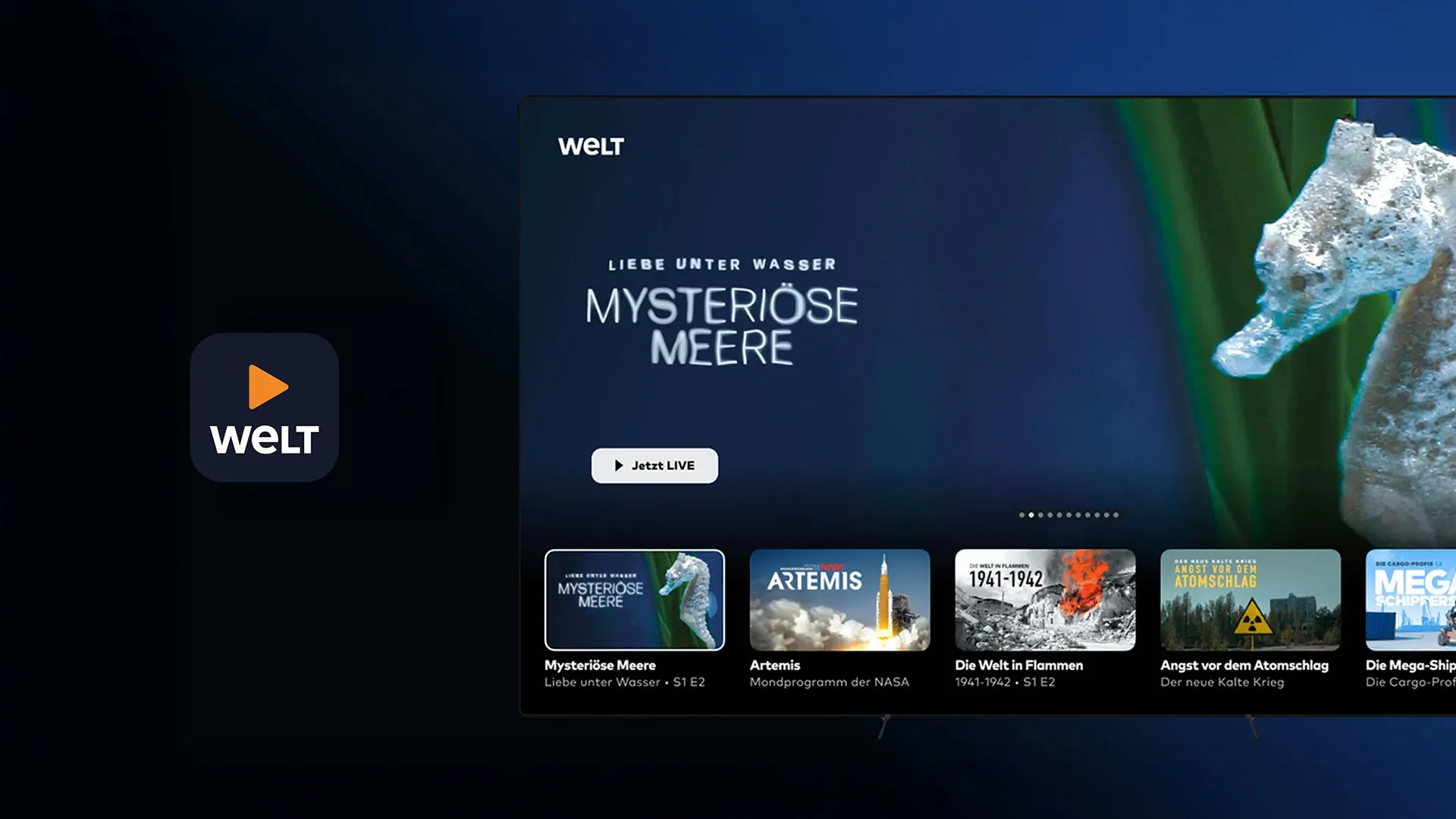
Building on the original mobile UX of the streaming news app, the next step was translating the product to the big screen in the living room. Instead of redesigning the experience from scratch, the goal was to extend the existing product architecture to TV platforms while preserving familiar interaction patterns.
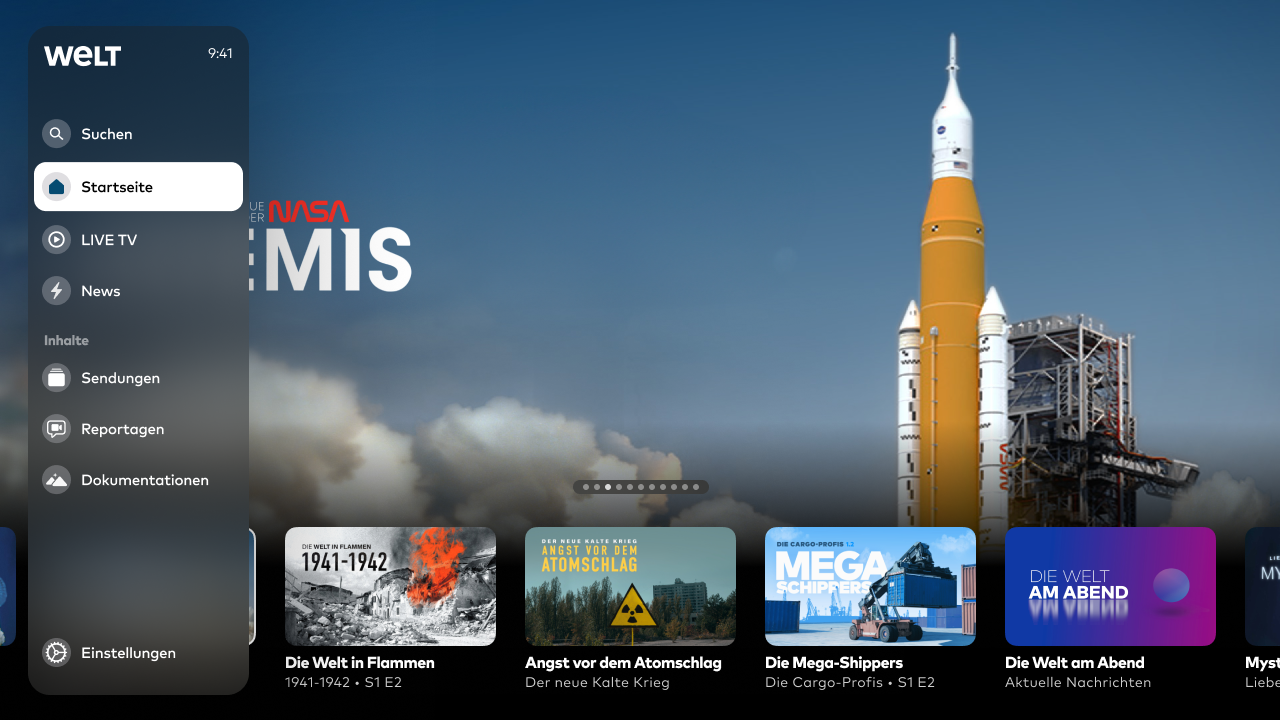
The resulting TV application brings the core functionality of the mobile and tablet product to Apple TV, Android TV, Samsung TV, Fire TV and Roku. It includes a hero-driven home screen, program detail pages, a continuous livestream, search and essential settings - all adapted for remote navigation, lean-back viewing and large-screen readability.
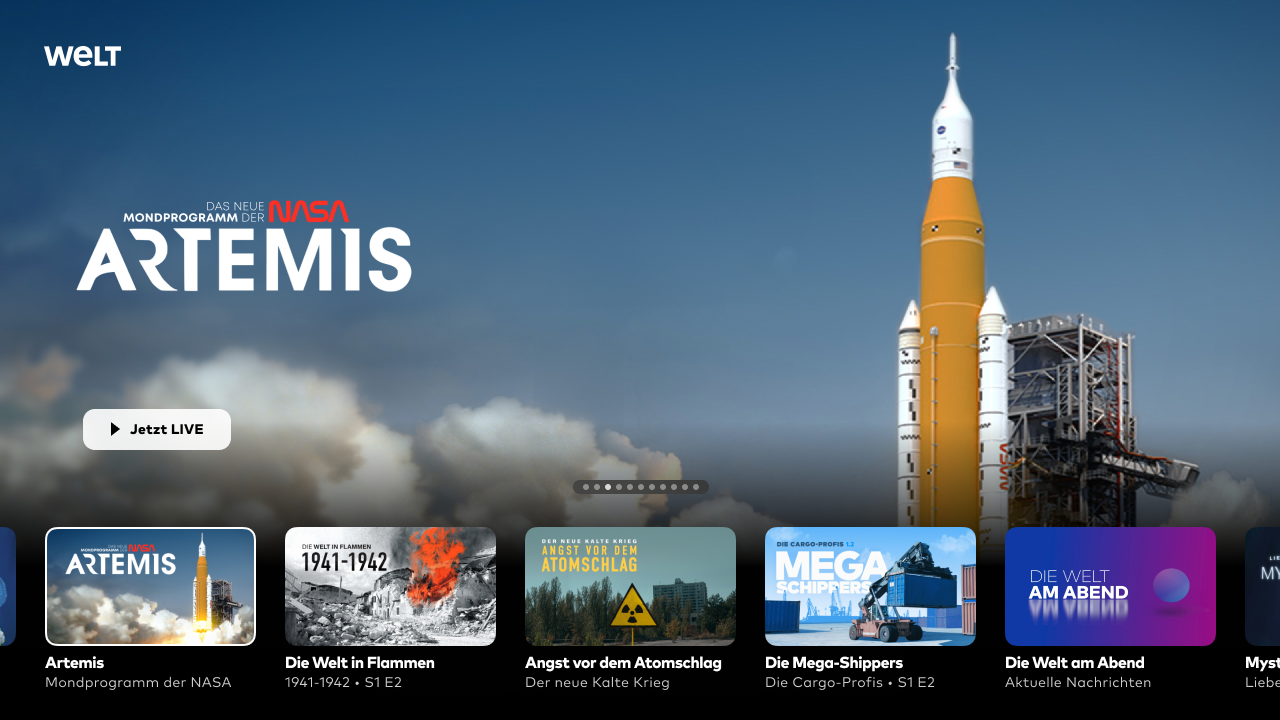
Touch-driven navigation was translated into a focus-based remote interface, while the content architecture of the existing app remained largely intact.
The home screen highlights current programming through a large hero stage and editorial content rows. From there, users can enter program detail pages, browse topics or immediately start the livestream: maintaining the same editorial hierarchy already familiar from the mobile experience.
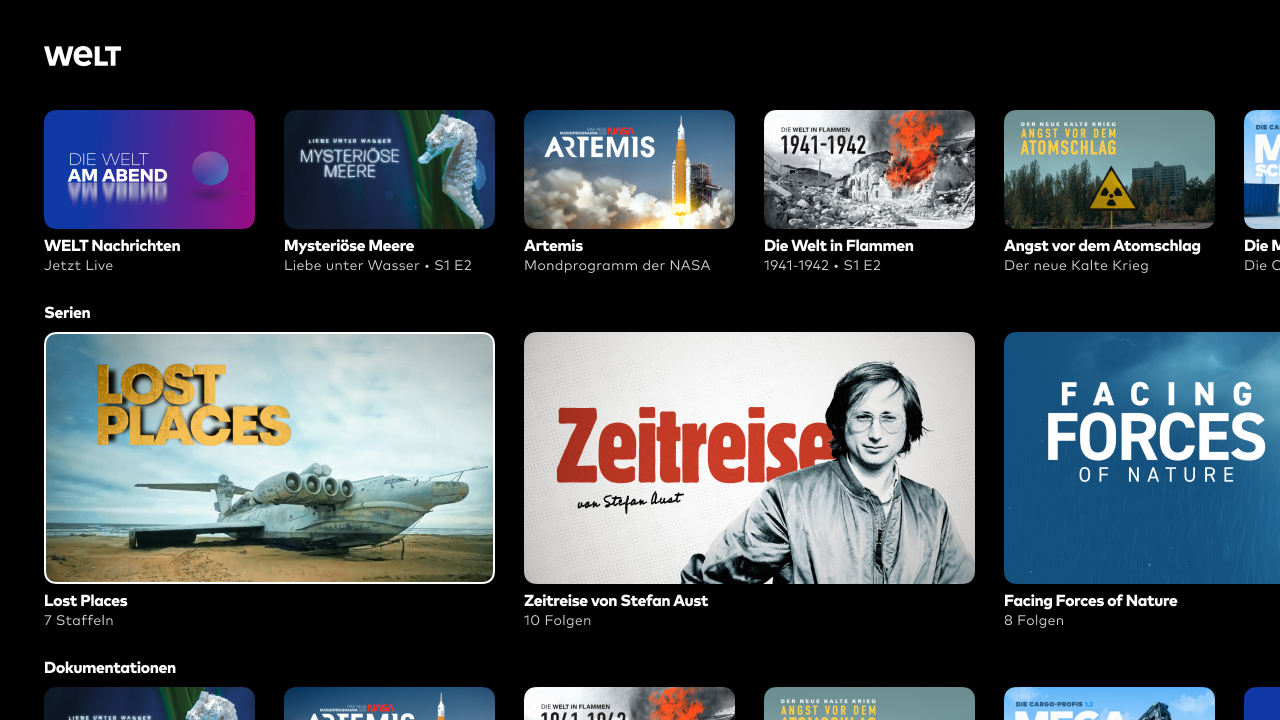
- 01Hero-based home screen highlighting current programming and editorial picks
- 02Continuous livestream as the primary entry point into the product
- 03Detail pages for programs, topics and editorial video content
- 04Search for shows, topics and videos across the catalog
- 05Basic account and app settings
- 06Focus-based navigation optimized for remote control and lean-back viewing
While the TV application focuses on extending the existing product to the living room, the project also explored how the same content ecosystem could evolve on emerging spatial platforms.
On Apple Vision Pro, the concept shifts from a screen-based interface to a spatial news environment. Instead of a fixed layout, the livestream becomes a floating focal point surrounded by contextual information layers and immersive environments.
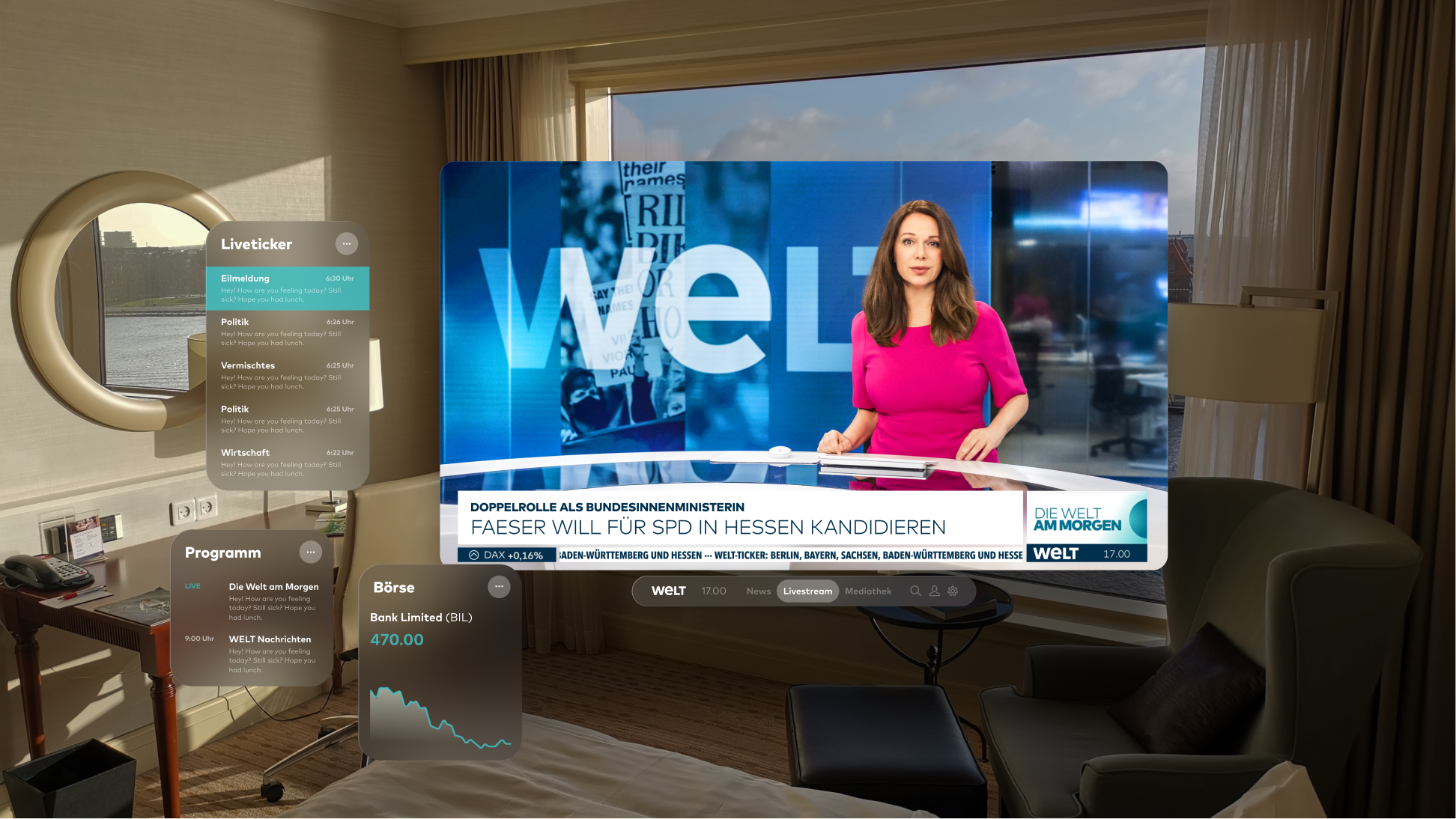
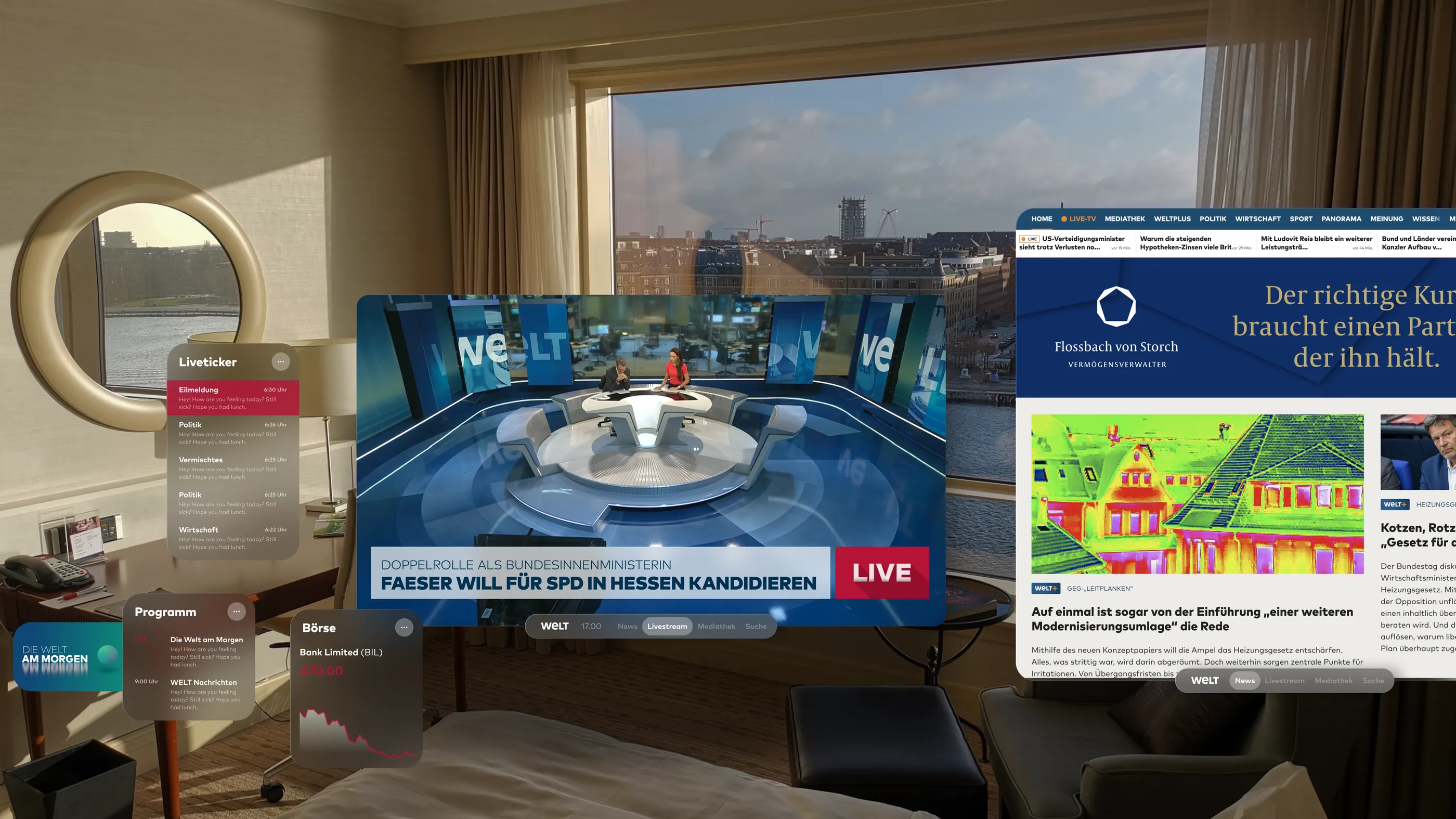
Users can watch news while standing inside 360° environments captured from real locations: city squares during elections, reconstruction sites after natural disasters, or scientific expeditions. Documentary formats expand this concept further by offering fully immersive storytelling spaces.
- 01Floating live broadcast window with contextual data panels
- 02360° environments from news locations (cities, events, crisis zones)
- 03Immersive documentary worlds: oceans, wildlife habitats, engineering sites
- 04Spatial article layers with charts, maps and timelines
- 05Ambient environments during ad breaks to keep viewers engaged
Together, these explorations outline two complementary directions: a production-ready TV application that scales the existing mobile product to living-room platforms, and a forward-looking spatial concept that rethinks how live news, data and documentary storytelling could be experienced in immersive environments.